
Emergency Chimney Inspection Near Me: What Davie Homeowners Should Do First
Most homeowners who call us after a chimney event have already made one mistake: they looked into the firebox, saw nothing obviously wrong, and went back to using the fireplace. After a chimney fire, the flue can look completely intact from below while the liner has cracked along its length. That’s why the NFPA requires a Level 2 inspection after every known chimney fire before the appliance goes back into service. This guide walks you through the first hour in order, starting with the step most people skip.
If you’d rather have a specialist handle the diagnosis than work through it yourself, call (877) 798-7859. We answer 24/7, with fast dispatch from 7am to 7pm, Sunday through Friday. Estimates are free.
Key Takeaways
- Four situations count as a chimney emergency in Davie: a chimney fire, a lightning strike, hurricane debris impact, or the smell of gas near the fireplace.
- Call 911 first for an active fire, a gas smell, or structural collapse. Skip that step only when everything is cold, stable, and clearly out.
- Photos taken before anyone touches the chimney protect your insurance claim and give the inspector a baseline to compare against.
- Post-event work calls for a Level 2 inspection with camera scanning, not a visual check from the firebox.
- Storm-chasing contractors appear after every major weather event in South Florida. Ask for chimney-specific credentials before you book.
What Counts as a Chimney Emergency in Davie?
A chimney emergency in Davie is a chimney fire, a lightning strike to the chimney or its cap, hurricane debris impact, or a gas smell near the fireplace. Anything else – a slow draft, a stain on the ceiling, a cracked crown you noticed on your own – is urgent but can usually be scheduled rather than treated as an emergency. Knowing which category you’re in determines whether you call 911, call a chimney specialist, or simply book an inspection.
Here’s how the four emergencies break down:
- Chimney fire. You may hear a low roar, a popping sound, or see flames or dense smoke at the top of the chimney. The fire can also be quiet and self-extinguish before you notice – a sign of that is creosote that looks like puffy, honeycombed ash inside the flue.
- Lightning strike. South Florida sees more lightning than almost anywhere in the country, and a strike can crack masonry, split a crown, or damage a liner without any visible flame.
- Hurricane debris impact. A downed limb or wind-driven debris can drop onto the cap, crown, or flashing. If anything has struck the chimney, treat the flue as suspect until it’s been scanned.
- Gas smell near the fireplace. This one is not a chimney problem to schedule. A gas odor means a possible leak, and it is a call-911 situation.
A rattling damper or a smoky fireplace on a windy day is annoying, not an emergency – we’ve had homeowners apologize for calling about smoke when the actual issue was a downdraft. Book an inspection, but sleep fine tonight.
Your First-Response Protocol, in Order
Your first move depends on what you’re seeing. If there’s an active fire, a gas smell, or visible structural collapse, call 911 before anything else. If the fire is out, the chimney is cold, and the structure looks sound, you can skip the fire department and move straight to documentation and a call to a chimney specialist. The sequence matters because each step protects the next one.
- Get everyone out and call 911 if flames are visible, you smell gas, or masonry has fallen. Don’t try to fight a chimney fire with water from below – it can crack a hot flue.
- Close the fireplace doors or damper only if the fire is already out and there’s no gas smell. Starving an active fire of air can help, but never at the cost of staying in the room.
- Wait for the chimney to cool completely before you get close to it. A flue stays hot for hours after the visible fire is out.
- Photograph everything from a safe distance, inside and out, before you clean up anything.
- Call your insurer to open a claim if there’s any chance of damage, then book a Level 2 inspection.
- Don’t light another fire until the flue has been inspected and cleared.
For routine maintenance when nothing has gone wrong, a standard chimney sweep is the right starting point. The difference between that and what you need after an event is night and day, and it’s the subject of the next section.
What to Photograph Before the Technician Arrives
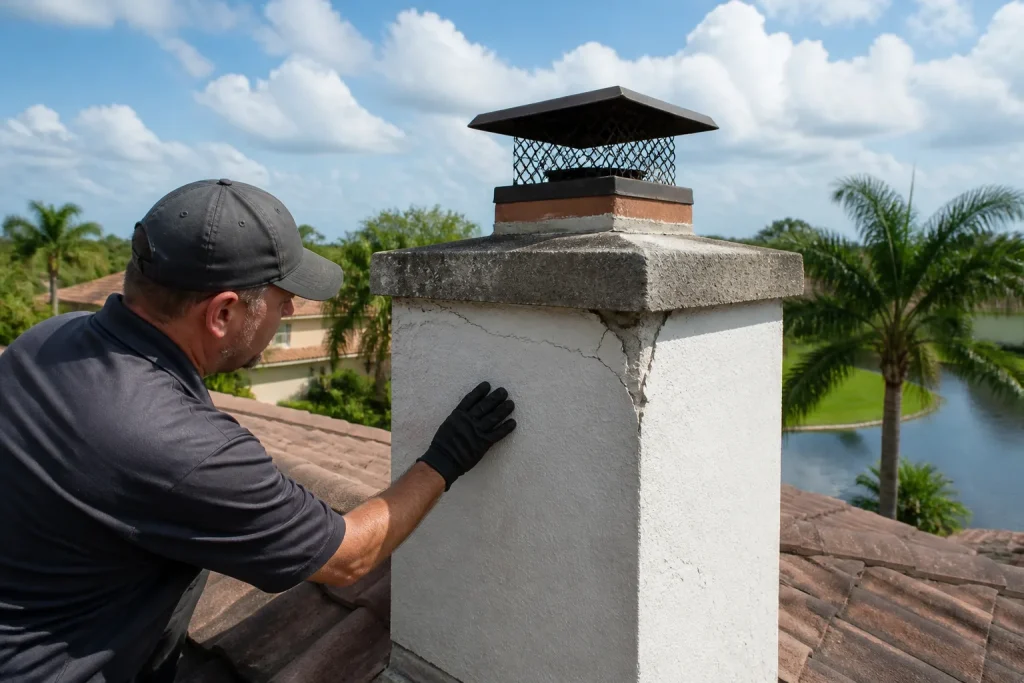
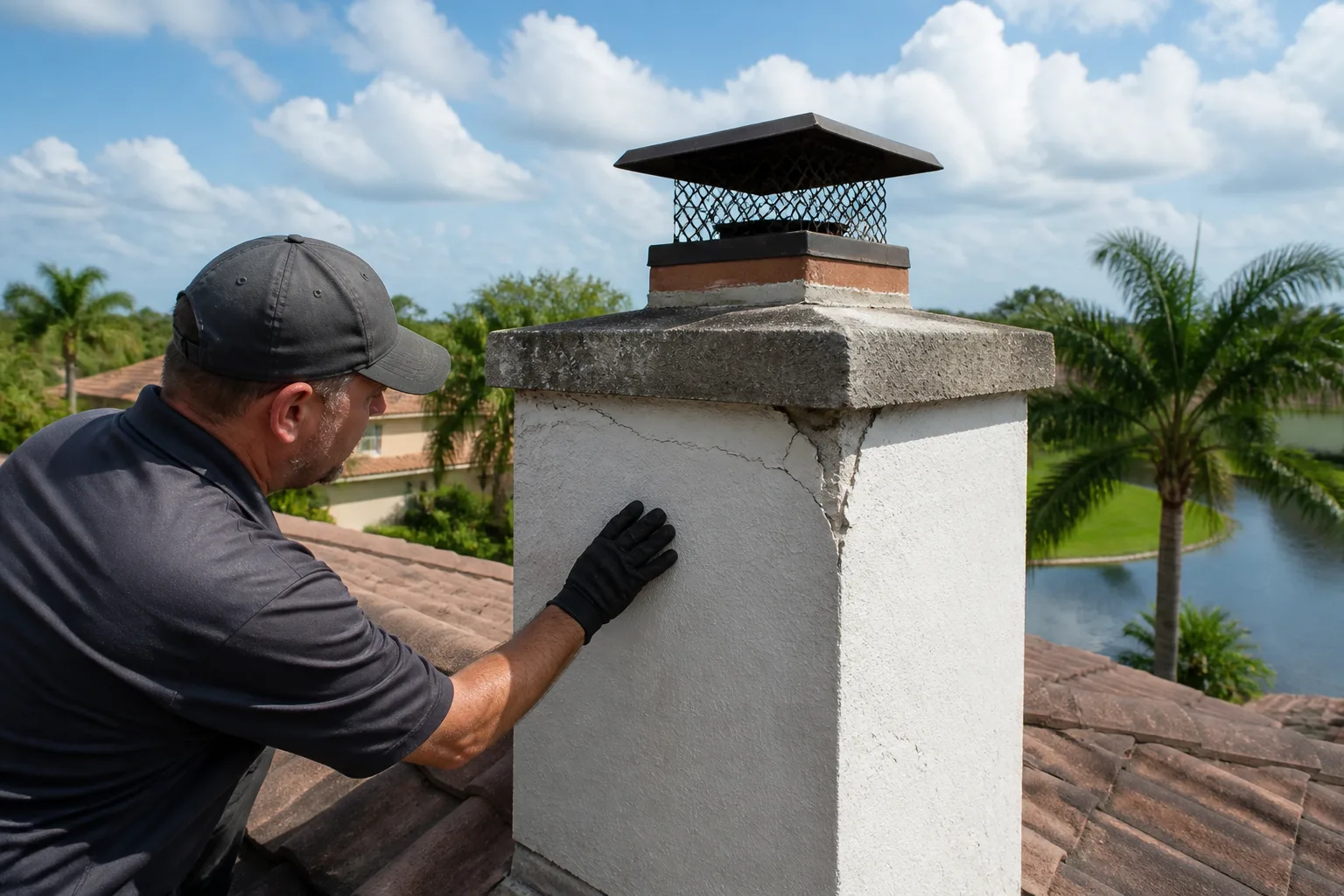
Photograph the chimney from four angles outside, the firebox and damper from inside, the cap and crown if you can see them safely from the ground, and any debris, staining, or cracked masonry up close. These photos do two jobs: they document the condition for your insurance adjuster, and they give the inspector baseline images to compare against what the camera finds inside the flue. Neither job works if you tidy up first.
A few specifics worth capturing in Davie:
- Any dark staining on the exterior masonry, which can indicate moisture or creosote movement.
- Debris on the roof or in the yard that shows what struck the chimney.
- Scorch marks around the firebox opening or on the hearth.
- The cap and spark arrestor from the ground, zoomed in as far as your phone allows.
- Any water staining on ceilings or walls near the chimney chase.
Don’t climb onto the roof to get the perfect shot. A photo from the ground is plenty; a fall is a second emergency on top of the first. Our technicians have up to experience, and the first thing they’ll ask for is whether you have pre-inspection photos. Having them ready speeds up the whole process and keeps your claim clean.
What a Level 2 Inspection Covers That a Standard One Doesn’t
A Level 2 inspection covers the accessible portions of the chimney interior using a camera, plus the attic, crawl space, and any concealed areas a visual check from the firebox can’t reach. A standard Level 1 inspection is a visual assessment of what’s visible without tools. After a chimney fire, a lightning strike, or debris impact, the visible portions are exactly the ones you can’t trust – a liner can be fractured along its full length while the firebox opening looks untouched.
That’s why camera scanning is non-negotiable in post-event scenarios. Without it, an inspector is guessing, and guessing after a chimney fire is how a homeowner ends up relighting a fire into a broken flue. When we find cracked or deteriorated liner material, we assess two repair paths: HeatShield resurfacing for certain types of liner damage, or a DuraFlex flexible liner system when the flue needs full or partial relining. Both are professional-grade product lines, not big-box substitutes, and we match the material to the flue type rather than reaching for whatever’s on hand.
An inspection isn’t a formality here. It’s how we find the problem before it becomes a fire risk, and after an event it’s how we prove what happened. Ask any inspector you hire which level they’re performing and whether the camera scan is included. If the answer is vague, that’s your answer.
How to Vet an Emergency Chimney Technician in Davie
Hire a chimney specialist with a verifiable credential for the inspection level you need, a real business identity, and camera equipment on the job – not a general handyman or a storm-chasing contractor who appeared after the last big weather event. South Florida’s storm season brings out roofers and “chimney experts” who vanish as fast as they arrived. The checklist below filters most of them in about five minutes.
- Ask what level of inspection they’ll perform. A post-fire call should get a Level 2 answer, not “we’ll take a look.”
- Ask about camera equipment. A specialist will describe it without hesitation.
- Ask which product lines they work with. If they can’t name a brand, they probably don’t do relining or resurfacing.
- Get the estimate in writing before work begins. A written estimate sets the final price, and there’s no flat fee for the call itself – estimates are free.
- Confirm they handle inspection, sweep, and repair. When the inspection, the sweep, and the repair all come from the same team, nobody hands your chimney off to a second contractor halfway through.
- Check for a real local presence. A legitimate chimney specialist in Davie can tell you about the local building department and how Florida’s humidity and heavy rain interact with masonry chimneys. A storm chaser can’t.
This is also why we work with Famco and Copperfield components for caps, dampers, and venting – when something got knocked off in a storm, the replacement needs to fit the chimney that’s actually on the roof. A brand you’ve never heard of from a truck that showed up uninvited is not a repair plan.
When to Call a Pro
Call a pro the moment you suspect a chimney fire, a strike, or debris impact – even if everything looks fine from below. The damage these events cause is interior, and it’s invisible until a camera goes in. If your fireplace is smoking heavily, that’s a reason to stop using it and book an inspection, not a reason to wait for the season to end.
If you need chimney repair after an event, we can usually tell you from the inspection whether the fix is resurfacing, relining, or something at the crown or cap. Nothing gets recommended without camera evidence you can view for yourself, and we’ll say plainly when work can safely wait.
Related services in Davie: our Chimney Sweep Davie page walks through routine maintenance, and our repair page covers the structural side.
The Bottom Line
After a chimney event, the order of operations protects you: call 911 for active fire, gas, or collapse; cool down and photograph everything before you clean; then get a Level 2 inspection with camera scanning and keep a fire out of the flue until it’s cleared. The one thing never worth doing is relighting after a chimney fire without an inspection – the flue can look intact and be fractured the whole way down. If you’re in Davie and need help, Chimney Sweep Davie offers free estimates. Call (877) 798-7859. We answer 24/7, and fast dispatch runs 7am to 7pm, Sunday through Friday.
Frequently Asked Questions
Yes. A flue can appear completely intact from the firebox while the liner is fractured along its full length, which is why the NFPA requires a Level 2 inspection after every known chimney fire before the appliance is used again. Camera scanning is the only way to see this damage. Call (877) 798-7859 for an exact quote – estimates are free.
Call 911 first for an active fire, a gas smell near the fireplace, or visible structural collapse. If the fire is out, the chimney is cold, and nothing has fallen, you can skip the fire department and move straight to documentation and a chimney specialist. Call (877) 798-7859 if you’re unsure which category you’re in – estimates are free.
A Level 2 inspection includes camera scanning of the accessible chimney interior plus the attic, crawl space, and concealed areas, while a standard Level 1 is a visual check of what’s reachable without tools. After a fire, strike, or debris impact, the hidden areas are the ones that matter. Call (877) 798-7859 to book one – estimates are free.
A legitimate specialist will name the inspection level, describe their camera equipment, identify the product lines they work with, and give you a written estimate before work starts. Storm chasers stay vague and push for a decision fast. When in doubt, call (877) 798-7859 – estimates are free.
Written by the team at Chimney Sweep Davie.
Need Chimney Cleaning Help?
Call Chimney Sweep Davie - licensed & insured, with free written estimates in Davie.
(877) 798-7859